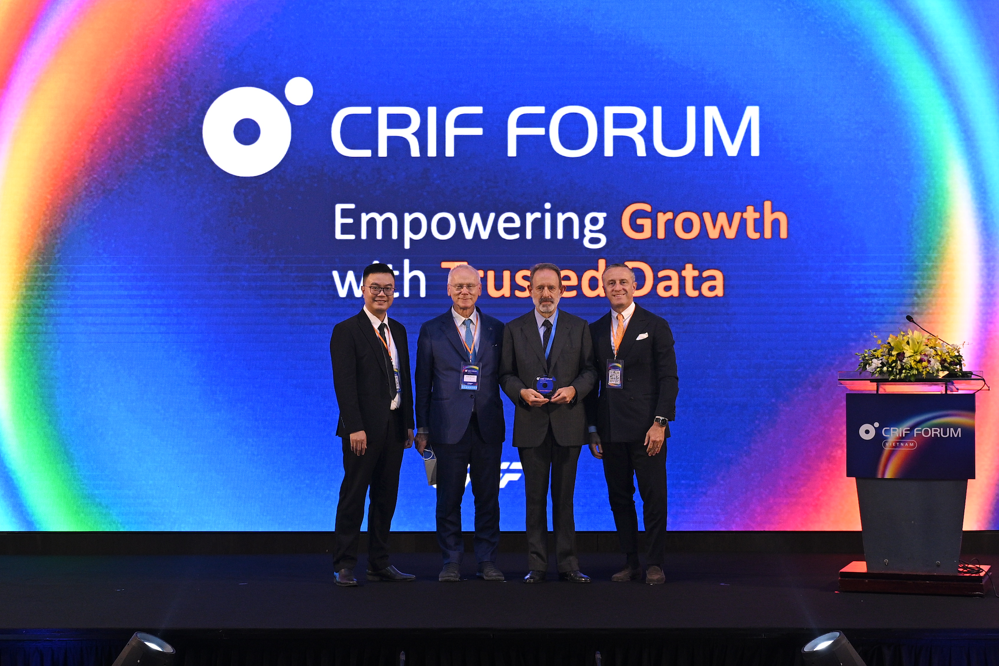
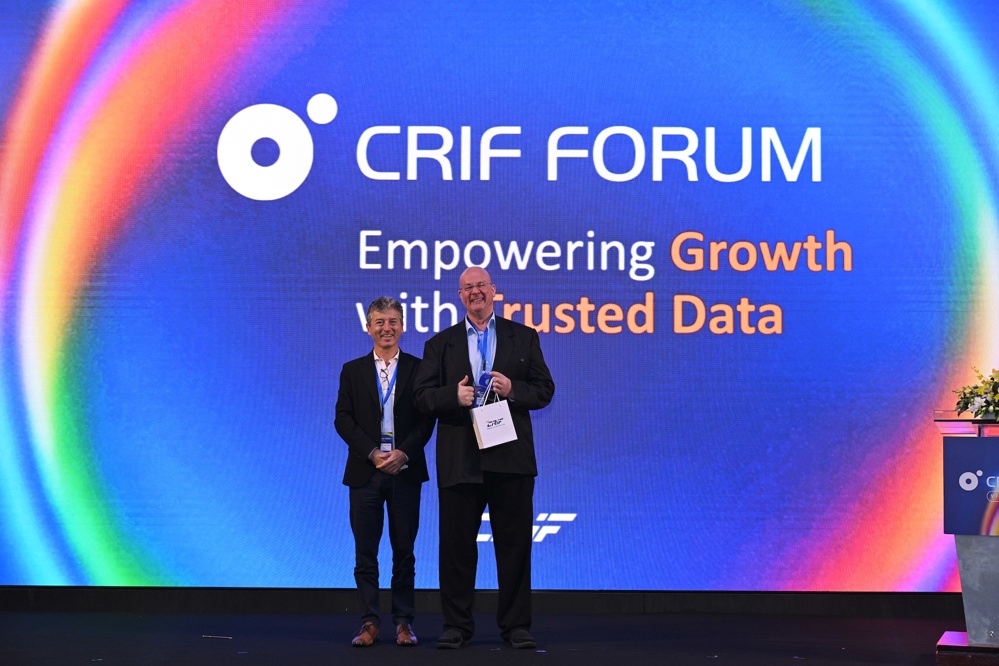
On 27 August 2026, CRIF brought together leaders from capital markets, banking, credit rating, advisory, law, and development finance at Pan Pacific Hanoi for the first CRIF Forum Vietnam, part of our CRIF Forum 2026 regional series across Asia.
Nguyen Minh Tu, Managing Director – Vietnam, CRIF, welcomed attendees and framed the forum theme: Empowering Growth with Trusted Data. H.E. Marco Della Seta, Ambassador of Italy in Vietnam, Embassy of Italy.

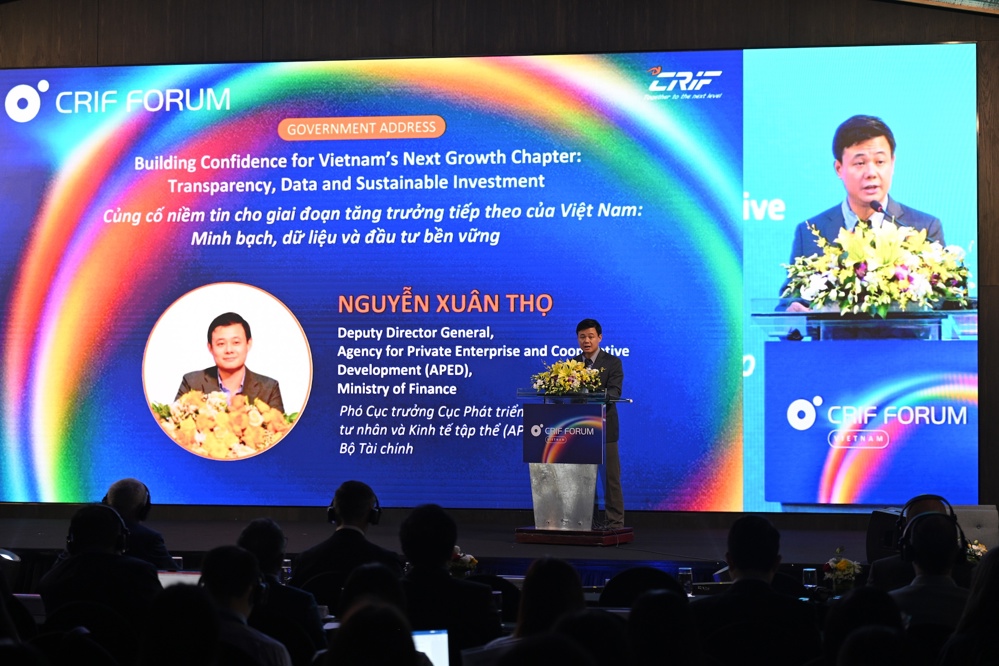
This was followed with special remarks on the role of international partnership in Vietnam's continued development, and Nguyen Duc Trung, Deputy Director General, Agency for Private Enterprise and Cooperative Development, Ministry of Finance, delivered the government address.
Across the day, one idea came through consistently: Vietnam's growth story is not in question. What turns that growth into lasting investor and business confidence is reliable data, clearer disclosure, and stronger governance.
Reading the Signals: A Strong Story With Short-Term Noise
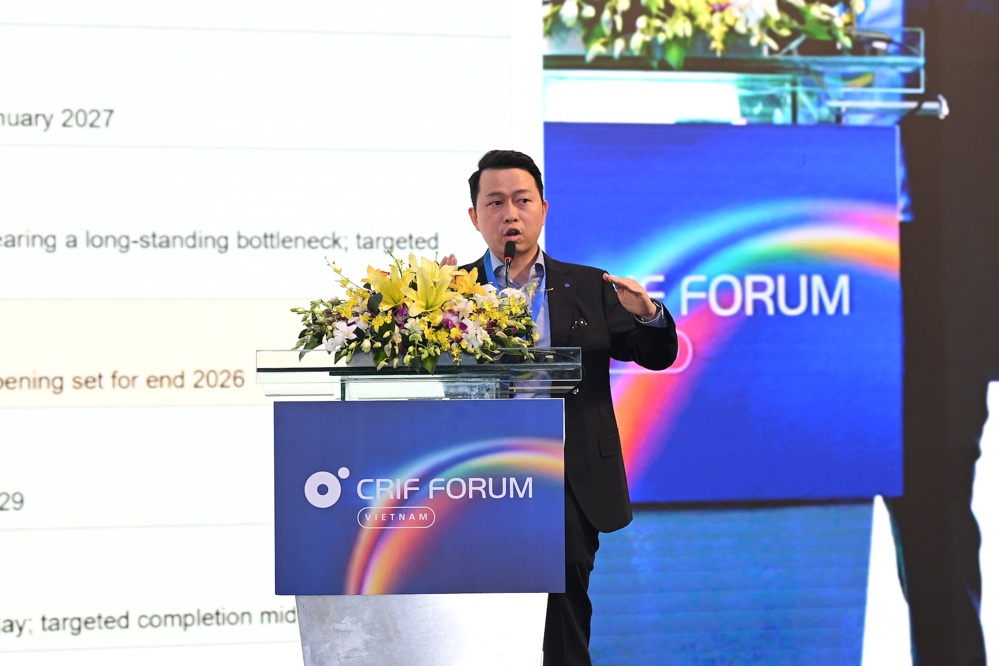
Tyler Nguyen Manh Dung, Chief Market Strategist at Ho Chi Minh City Securities Corporation (HSC), opened the day with a clear read of where Vietnam stands. The long-term growth story is strong, with record FDI disbursement and solid export and retail growth. The short-term picture is harder to read: shifting trade dynamics, global tax reform, credit volatility, and a widening gap between foreign-invested and domestic businesses.
On the macro side, core inflation is manageable, and the trade balance is healthy. The underappreciated risk is elevated interest rates, particularly for SMEs, with credit demand outpacing money supply. His outlook was for rates to hold steady through year-end before gradually easing.
Household savings may help. Gold, crypto, US dollars, and property are all losing some appeal, as the gaps between local and international gold prices and between official and unofficial exchange rates narrow, property transactions soften, and crypto participation declines. That could move more savings into bank deposits and ease liquidity pressure.
Infrastructure is the other big lever. Vietnam is running its largest public-investment budget to date, with roughly 40% disbursed in the first seven months, 75 highway projects underway, and planned rail investment of USD 150 billion through 2050. Rail connectivity and logistics costs remain structural weaknesses to address.
His overall assessment: risks are manageable, and the risk/reward balance is favorable, with rates and liquidity the near-term concerns to watch and a market upgrade the catalyst for wider access to global investors.
Capital Follows Trust: The Path to an International Financial Centre
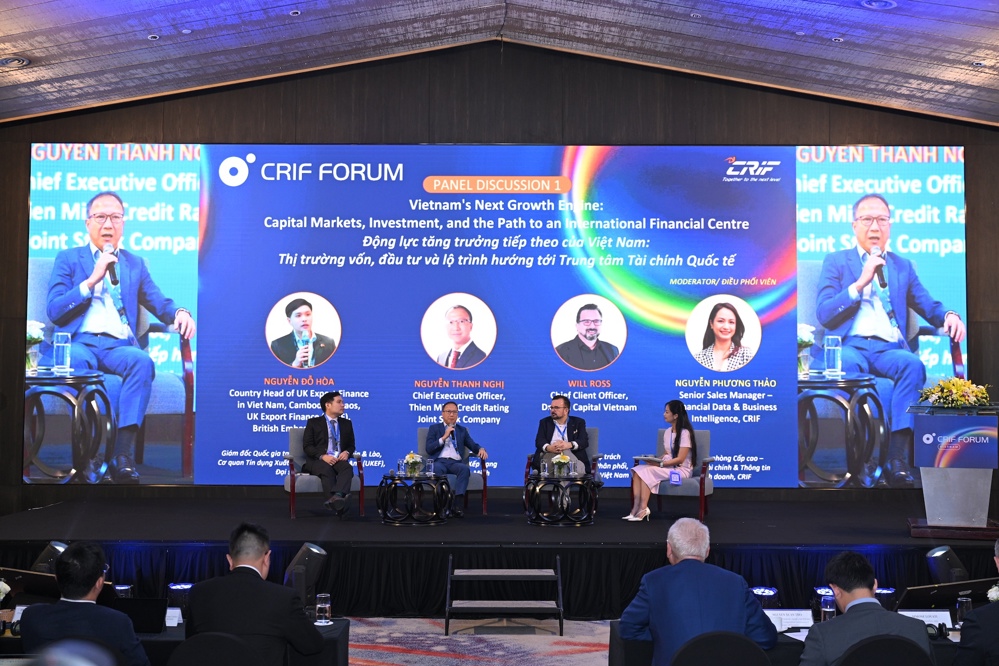
The first panel, moderated by Thao Nguyen, Senior Sales Manager, Financial Data & Business Intelligence, CRIF, brought together Harry Nguyen, Country Head of UK Export Finance in Vietnam, Cambodia and Laos, UK Export Finance (UKEF), British Embassy Ha Noi; Nguyen Thanh Nghi, Chief Executive Officer, Thien Minh Credit Rating Joint Stock Company; and Will Ross, CFA, Chief Client Officer, Dragon Capital Vietnam.
The starting point was a paradox. Vietnam offers 8%+ GDP growth, yet global allocators still lack urgency. What is missing is not growth but visibility and confidence. Panelists looked ahead to a potential MSCI upgrade as a further catalyst, with passive equity inflows estimated at USD 1.5 to 3 billion.
Ross framed the opportunity as three flavors of growth: manufacturing capacity and industrial zones; rising consumption and private services; and reform-led infrastructure construction. Across all three, investors need consistent, comparable evaluation, including standardized bond credit ratings and assessments that work at portfolio scale.
The barriers to confidence were named plainly: complex property-sector ownership structures, inconsistent or incomplete corporate disclosures, and a shortage of verifiable investment data. Regulatory and political certainty were cited as prerequisites for capital allocation.
On the International Financial Centre ambition, the panel was clear that it must be more than a branding exercise. Done well, it becomes an entry point for long-term capital that can fund infrastructure, with the DIFC as a reference model. Building domestic long-term savings through pensions and individual savings will also matter, reducing reliance on foreign flows as the population ages. The session's closing line summed it up: capital follows trust.
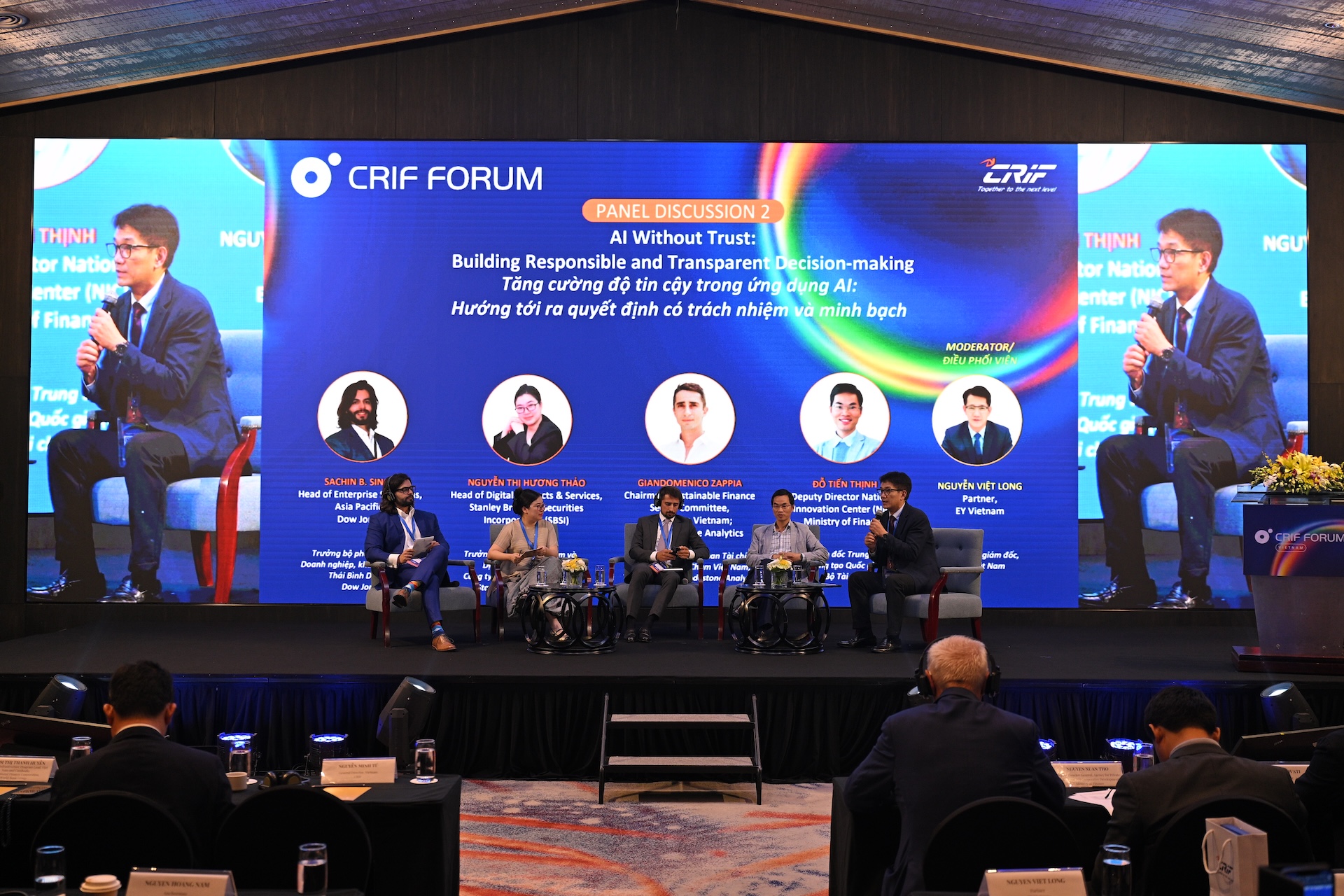
AI Without Trust: Governance, Not Just the Model
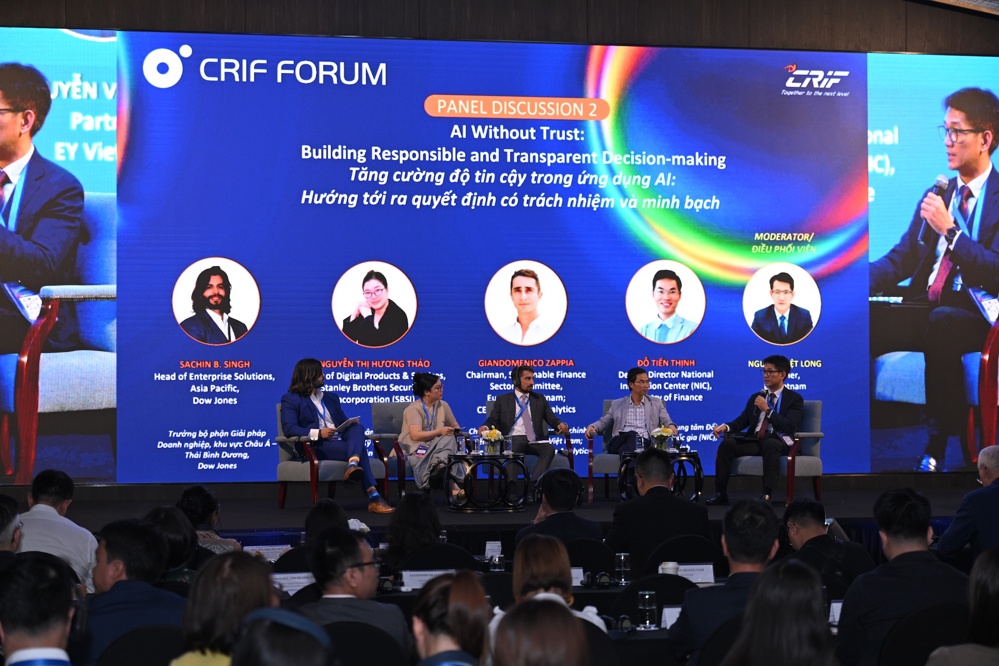
The AI panel, moderated by Nguyen Viet Long, Partner, EY Vietnam, featured Sachin B Singh, Head of Enterprise Solution, Asia Pacific, Dow Jones; Do Tien Thinh, Deputy Director, National Innovation Center (NIC), Ministry of Finance; Giandomenico Zappia, Chairman, Sustainable Finance Sector Committee, EuroCham Vietnam, and CEO, Lodestone Analytics; and Nguyen Thi Huong Thao, Head of Digital Products & Services, Stanley Brothers Securities Incorporation (SBSI).
With Vietnam's Personal Data Protection Decree and an evolving AI governance framework raising the bar for accountability, the conversation reframed the core challenge. Government is already using AI extensively, while weighing its effect on the structure of the labor force. For organizations, the hard part is governance, not the model itself.
Panelists drew a sharp line between casual individual use and consequential business decisions. When AI informs a real decision, organizations need credible, traceable sources for what it produces. Some financial institutions are already restricting AI to internal policy documents and research for exactly this reason.
The discussion also pushed past the familiar idea of a human in the loop. What matters is human ownership of decisions, not just human sign-off. The recommended path is to start with simple, testable use cases whose outputs can be checked against actual results. The longer-term caution: reducing errors in narrow tasks can hide systemic risks in complex financial and legal systems.
Supply Chains: From One-Off Checks to Continuous Visibility
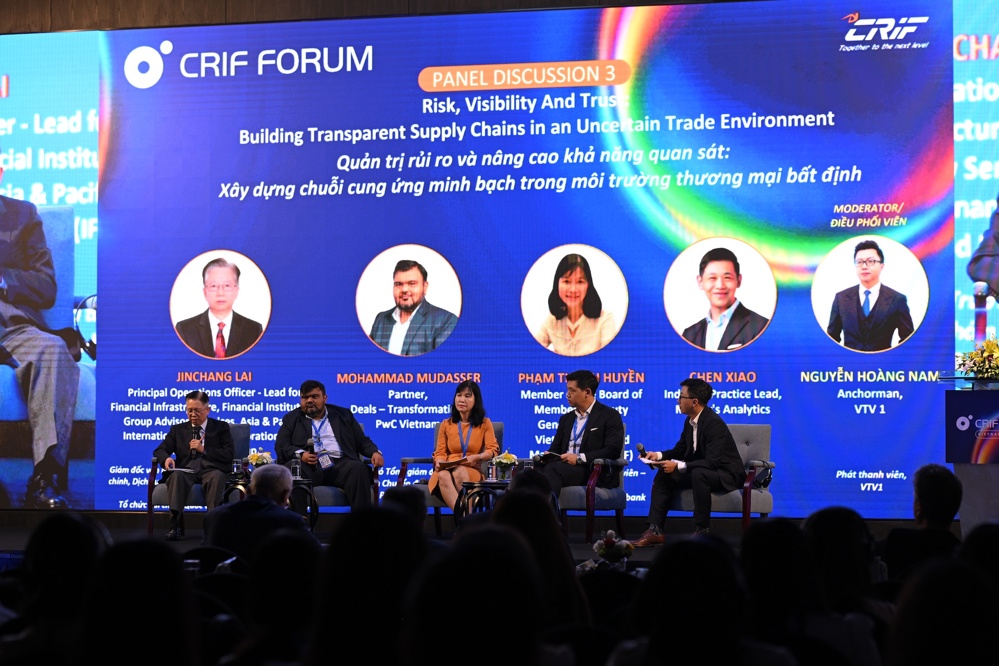
The risk and visibility panel was moderated by Nguyen Hoang Nam, Anchorman, VTV1, and featured Mudasser, Partner, Deals – Transformation, PwC Vietnam; Pham Thanh Huyen, Deputy Chief Executive Officer, Vietcombank Fund Management (VCBF); Chen Xiao, Industry Practice Lead, Moody's Analytics; and Jinchang Lai, Principal Operations Officer, Financial Infrastructure Lead, IFC, World Bank Group.
As Vietnam navigates evolving US trade policy and tariff negotiations, regulators, buyers, and lenders are all demanding transparency. Counterparty risk, country-of-origin accountability, and supplier due diligence are now conditions of market access and financing, not back-office compliance. Visibility beyond first-tier suppliers is essential.
The demand side is broad: compliance authorities, global buyers, and financial institutions, including AML, CFT, and sanctions-screening teams. The supply side is growing too, from supply chain and ESG platforms to credit information companies, satellite and shipping data, and government databases.
Readiness is still catching up. Several hundred local data providers have emerged over the past three years, yet reliable structured data, ESG ratings, and analytics capacity remain limited. Regulatory guidance is often too general to apply easily, so tools that reduce companies' reporting burden matter.
The clearest shift the panel called for: one-off supplier assessments are no longer enough. Organizations need continuous, portfolio-level monitoring of ownership and financial changes, sanctions or forced-labour signals, reputational news, and concentration in particular suppliers or regions.
Beyond Assembly: Building More Competitive Vietnamese Enterprises
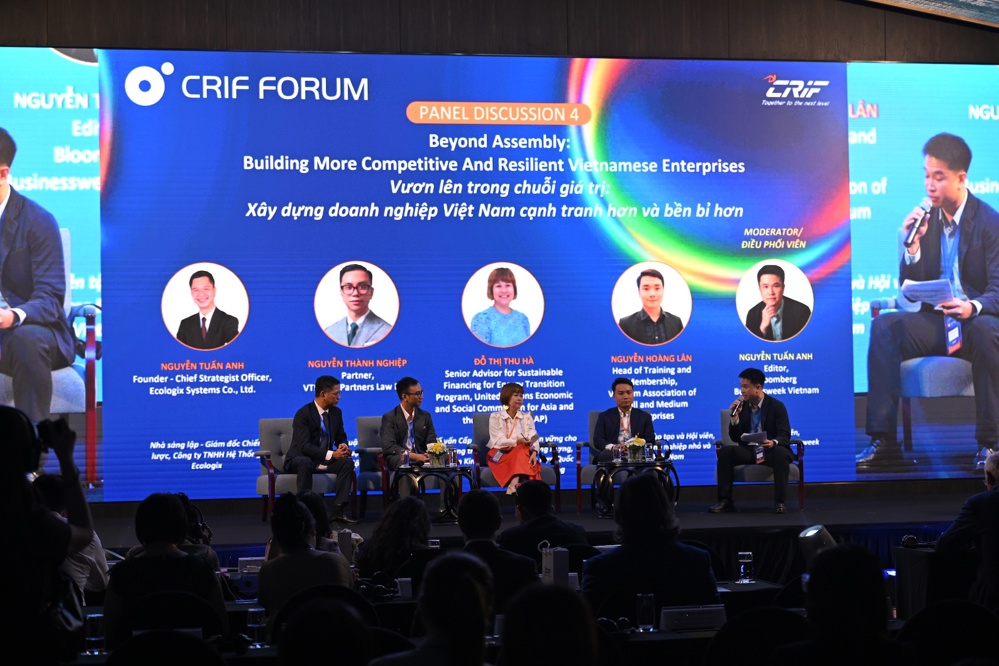
The final panel, moderated by Nguyễn Tuấn Anh, Editor, Bloomberg Businessweek Vietnam, brought together Anh Nguyễn, Founder & Chief Strategy Officer, Ecologix Systems Co., Ltd.; Nguyen Thanh Nghiep, Partner, VTN and Partners Law Firm; Ha Do, Senior Advisor, Sustainable Financing for Energy Transition, UNESCAP; and Nguyen Hoang Lan, Head of Training and Membership Dept, Vietnam Association of Small and Medium Enterprises (VINASME).
The session looked at what it will take for domestic enterprises to move beyond Vietnam's success as a manufacturing and export hub. Improving productivity, strengthening resilience, and capturing more value within global supply chains were framed as the next phase of growth, with trusted data, digital transformation, and stronger business ecosystems as the levers for long-term competitiveness.
From Manufacturing Hub to Innovation Economy
Dr. Oliver Massmann, Partner – General Director, Duane Morris Vietnam LLC, closed the forum with a keynote on Vietnam's next growth model.
Drawing on his involvement in Vietnam's trade integration since 1994, he traced the path that built the country's growth story: manufacturing, exports, foreign investment, WTO accession in 2007, and a network of 17 free trade agreements. The next chapter, he argued, is about creating more value at home through innovation, productivity, technology adoption, and stronger domestic enterprises, underpinned by trusted data, digital infrastructure, and innovation ecosystems.
He pointed to the FTSE Russell upgrade to secondary emerging market status as a milestone that would open the door to new investment. That reclassification took effect on 21 September 2026, less than a month after the forum.
A Few Things Became Clear
Across a full day of conversation at Pan Pacific Hanoi, a few things became clear.
Vietnam does not have a growth problem. It has a confidence gap. Investors, lenders, and buyers are ready to commit, but they need data they can verify, disclosures they can compare, and governance they can rely on.
The organizations building well are closing that gap now. They are moving from one-off checks to continuous visibility, from AI pilots to accountable decisions, and from attracting capital to earning it. In capital markets, in AI, in supply chains, and in the country's next growth model, trust is not a by-product of growth. It is what makes growth last.
A special thank you to Carlo Gherardi, President and CEO, CRIF Group, for being with us in Hanoi to mark this first-ever forum in Vietnam. Thank you to every speaker, moderator, panelist, and attendee who made it a success. These are the conversations that move things forward.